
In a bold move to strengthen Nigeria's domestic economy and promote local content, President Bola Ahmed Tinubu has introduced a policy prohibiting ministries, departments, and agencies from procuring foreign goods or services available locally without a reasoned waiver from the Bureau of Public Procurement. The Federal Executive Council has approved this sweeping directive, dubbed the "Nigeria First Policy," aimed at prioritizing Nigerian businesses in all government-related economic activities.
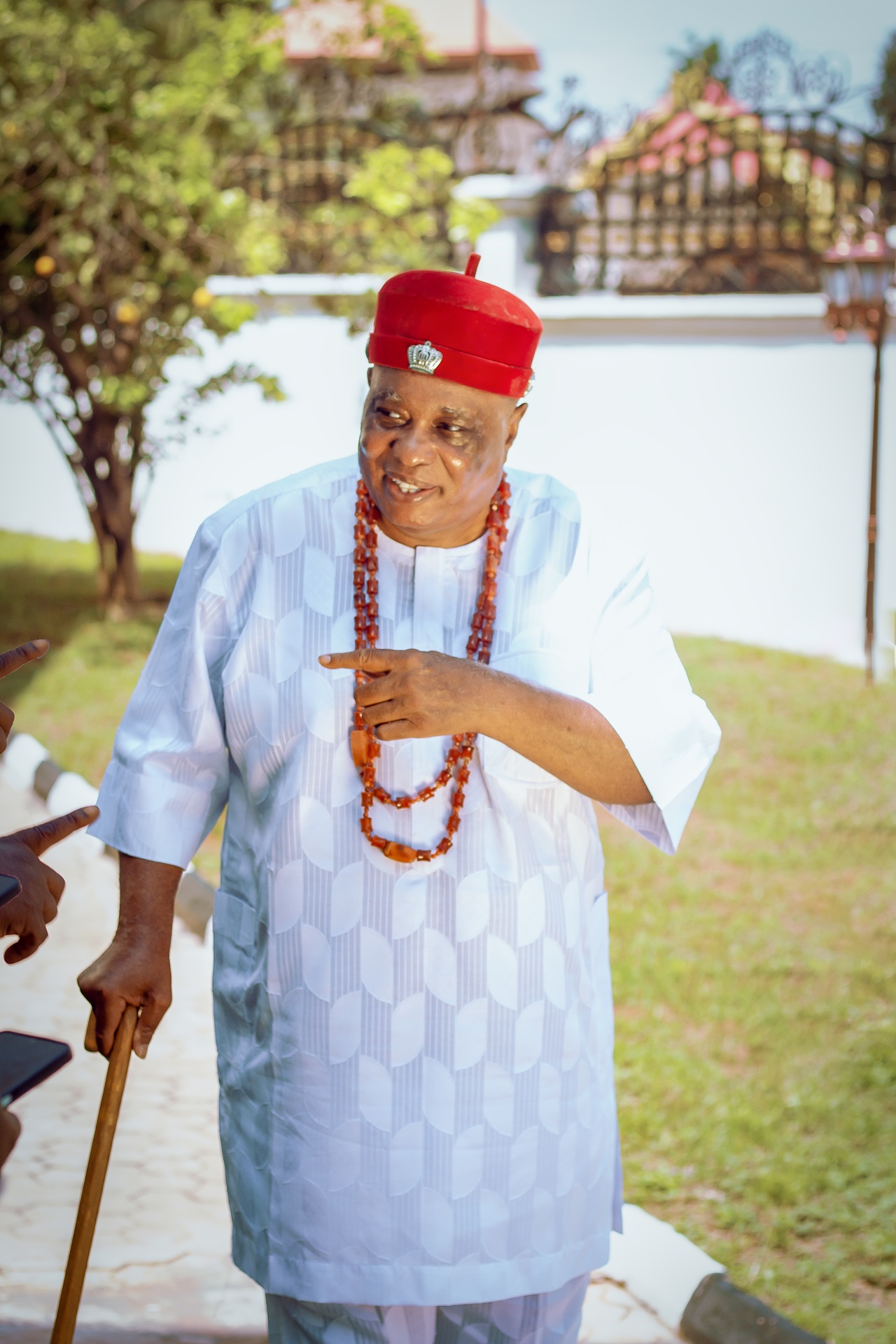
On May 6, 2025, Dr. Nwachukwu Anakwenze, former PDP Presidential Aspirant and Regent of Abagana, appeared on TVC News Nigeria with anchor Olajumoke Olatunji to discuss the policy’s objectives and its significance in reducing Nigeria’s dependence on foreign goods.
Anakwenze emphasized, “I have always been preaching this for so many years! Nigeria has been blessed more than any country in the world with natural resources! We are not going to be any major world power if we are not producing and selling. GDP means what are you producing compared to America and Britain and France. If you are only consuming everything, you are not going anywhere! Naira will be falling unless you start producing things.” He highlighted Nigeria’s intellectual capital, stating, “Nigerians are very intelligent! We are more intelligent than other people in other parts of the world, but we do not have good leaders that will encourage our local people to produce things. We have everything that it takes to make cars, computers, planes. We have aluminum and iron, that’s what it takes. We have the brains! When Nigerians migrate from the country into another country, they are one of the top persons in the world!”
Anakwenze emphasized, “I have always been preaching this for so many years! Nigeria has been blessed more than any country in the world with natural resources! We are not going to be any major world power if we are not producing and selling. GDP means what are you producing compared to America and Britain and France. If you are only consuming everything, you are not going anywhere! Naira will be falling unless you start producing things.” He highlighted Nigeria’s intellectual capital, stating, “Nigerians are very intelligent! We are more intelligent than other people in other parts of the world, but we do not have good leaders that will encourage our local people to produce things. We have everything that it takes to make cars, computers, planes. We have aluminum and iron, that’s what it takes. We have the brains! When Nigerians migrate from the country into another country, they are one of the top persons in the world!”
""
Anakwenze praised the government’s direction, advocating for incentives to boost local production. “You need to encourage business people to produce things, give them tax subsidies, cut down their taxes so they can produce. If you are importing everything, you are not going anywhere. You are going to be carrying last,” he said. He pointed out Nigeria’s potential in manufacturing, noting, “In Nigeria, we make cars, but why are we buying cars from outside? We have the raw materials to make tires, rubber, and petroleum by-products. We should be able to supply the whole world with tires! Nothing is stopping us, we are only stopping ourselves. We shouldn’t be importing from outsiders. America is banning people from importing. They want you to buy their own.”
Addressing how the Nigeria First Policy creates opportunities for local manufacturers and impacts government contracts, Anakwenze urged support for young entrepreneurs. “If we can encourage our young people, train them, give them loans and capital. Our young people are as smart as people in China or America or Europe. Motivate them, give them tax breaks. If you do this and create jobs, we will cut your tax. Send young people to skill acquisition schools for free. When they graduate, buy the equipment they need to start producing, that’s what they need,” he said.
On whether exceptions should allow foreign goods under the new policy and the importance of maintaining quality standards, Anakwenze commended the role of the National Agency for Food and Drug Administration and Control (NAFDAC). “I have ten companies in Nigeria, and NAFDAC comes to inspect them! Something like that will work! We don’t need to be producing less, but we need to be producing the best! But you have to encourage them, government needs to build roads, provide electricity, water supply, provide free education for young people,” he said. Drawing from his experience in the United States, he added, “I am a doctor in America! They paid me to go to school. When I graduated, they gave me a loan to start my medical business, and now I have about 5,000 doctors that work for me in America. They are not smarter than us, that’s what I’m trying to tell you.”
Anakwenze linked incentives to job creation and economic growth, stating, “When the government gives the business incentive, they need to tie it to creating jobs for young people and producing. When you produce, you sell it outside Nigeria, Naira goes up, dollar goes down. So that’s enough! Creating jobs, making Naira stronger!” He criticized past leadership, saying, “All these old people, their brains are dead! All they want is corruption! You need to focus on the next generation and forget about the old people who are just there to eat. The old people have disappointed Nigeria since independence to now except for Obasanjo, the rest of Nigeria’s Presidents have been a failure.”