
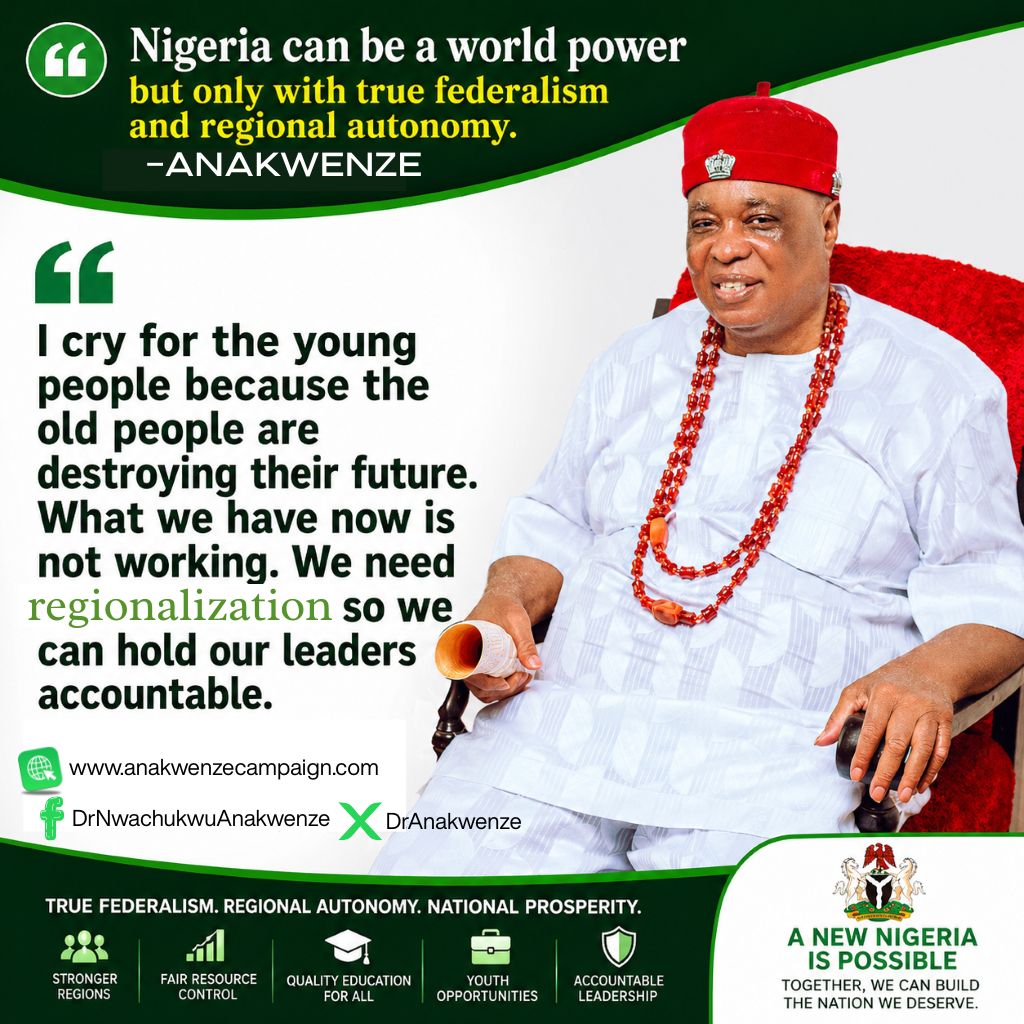
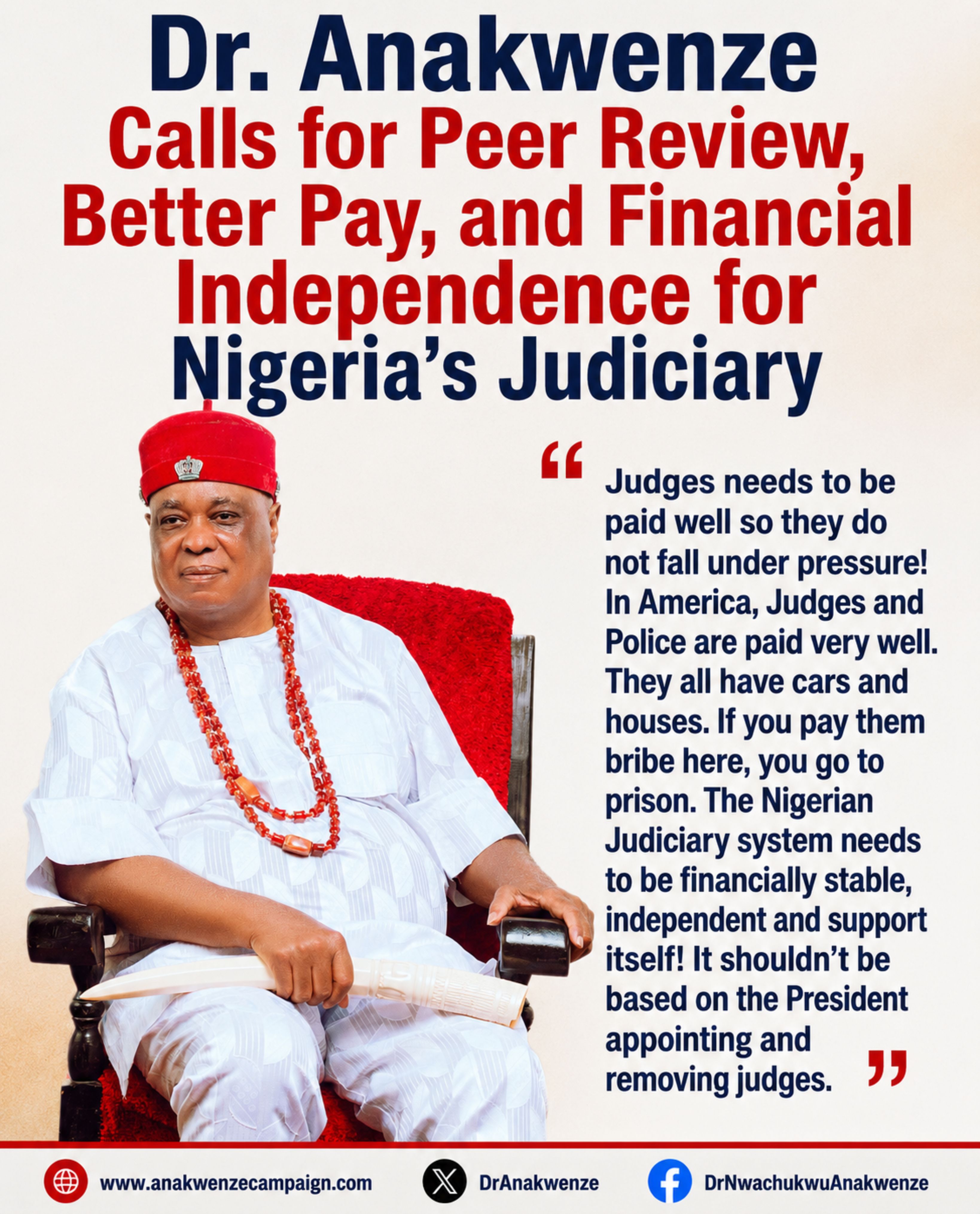
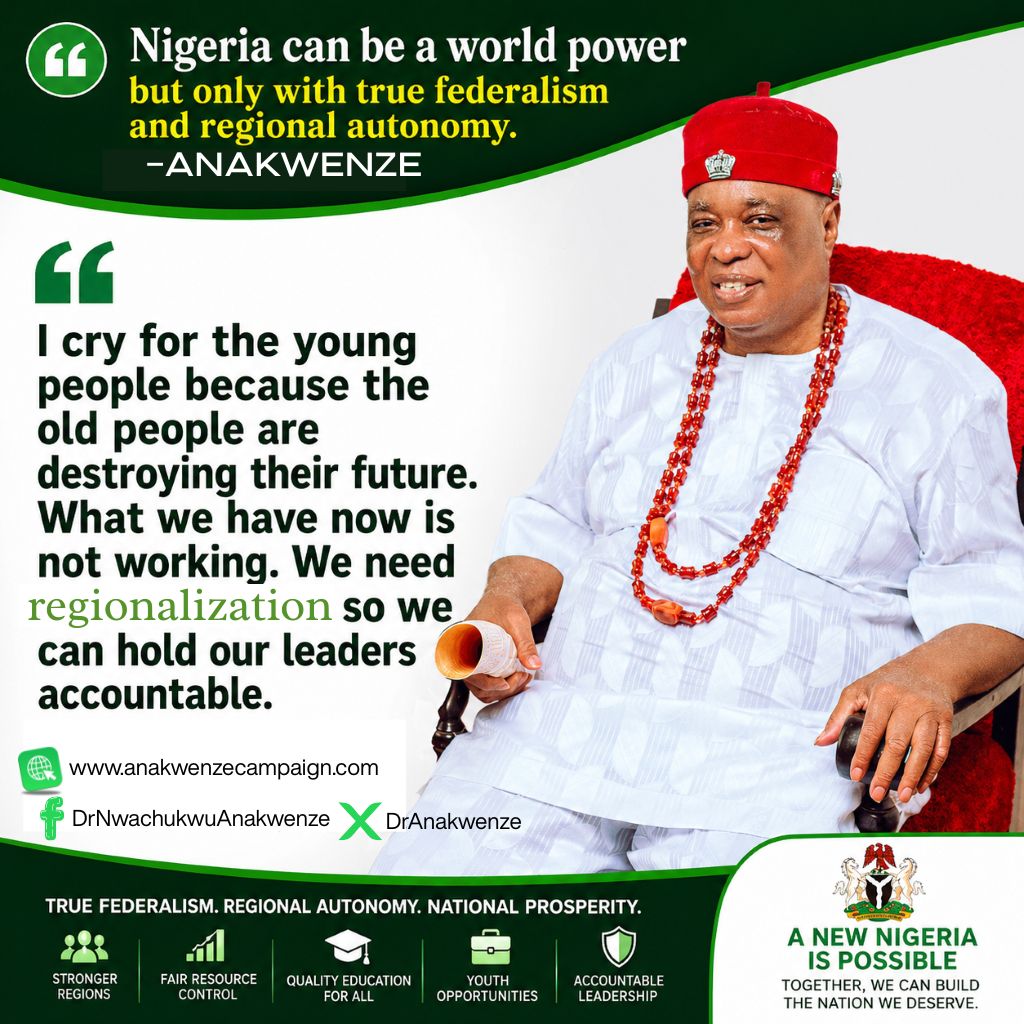
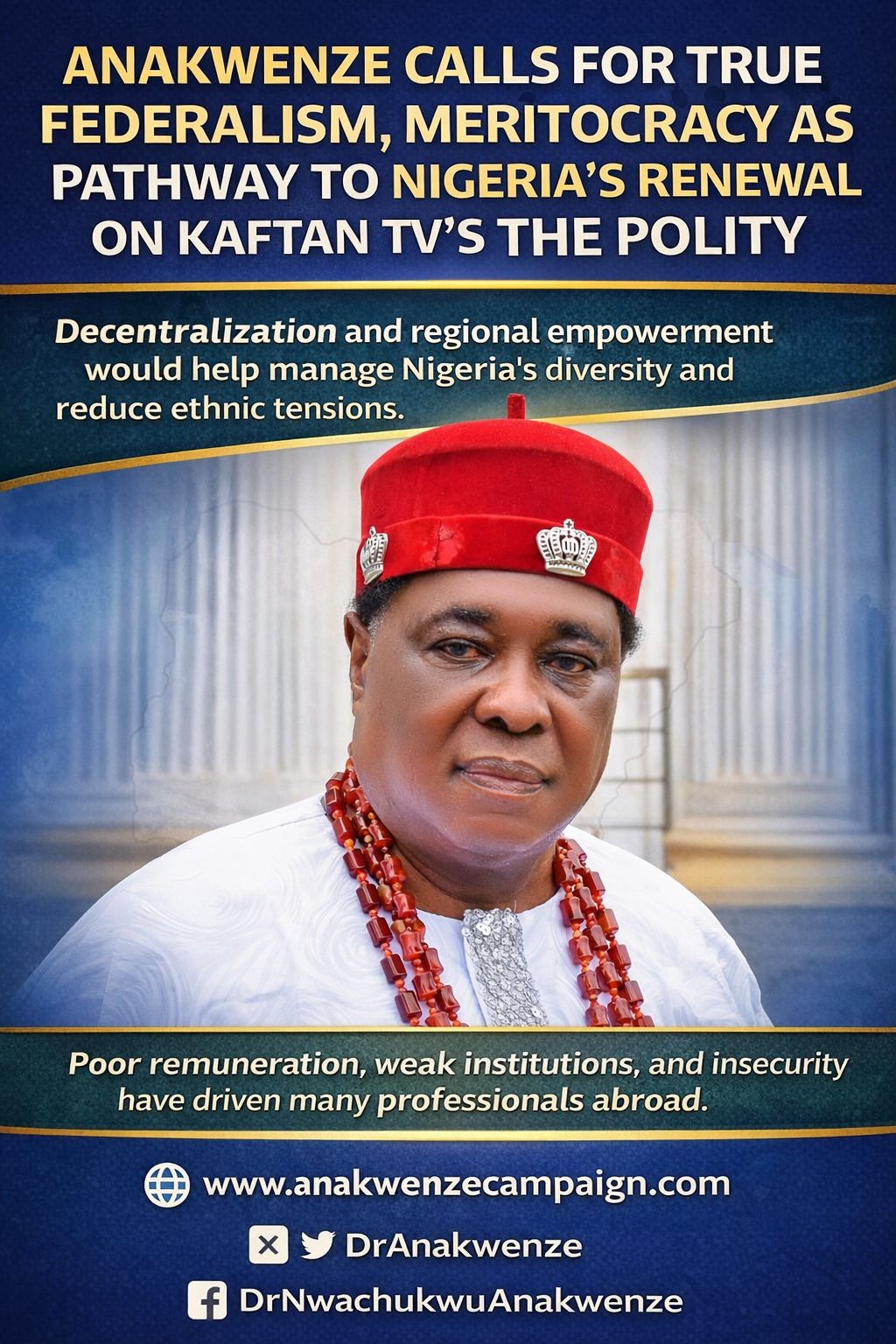
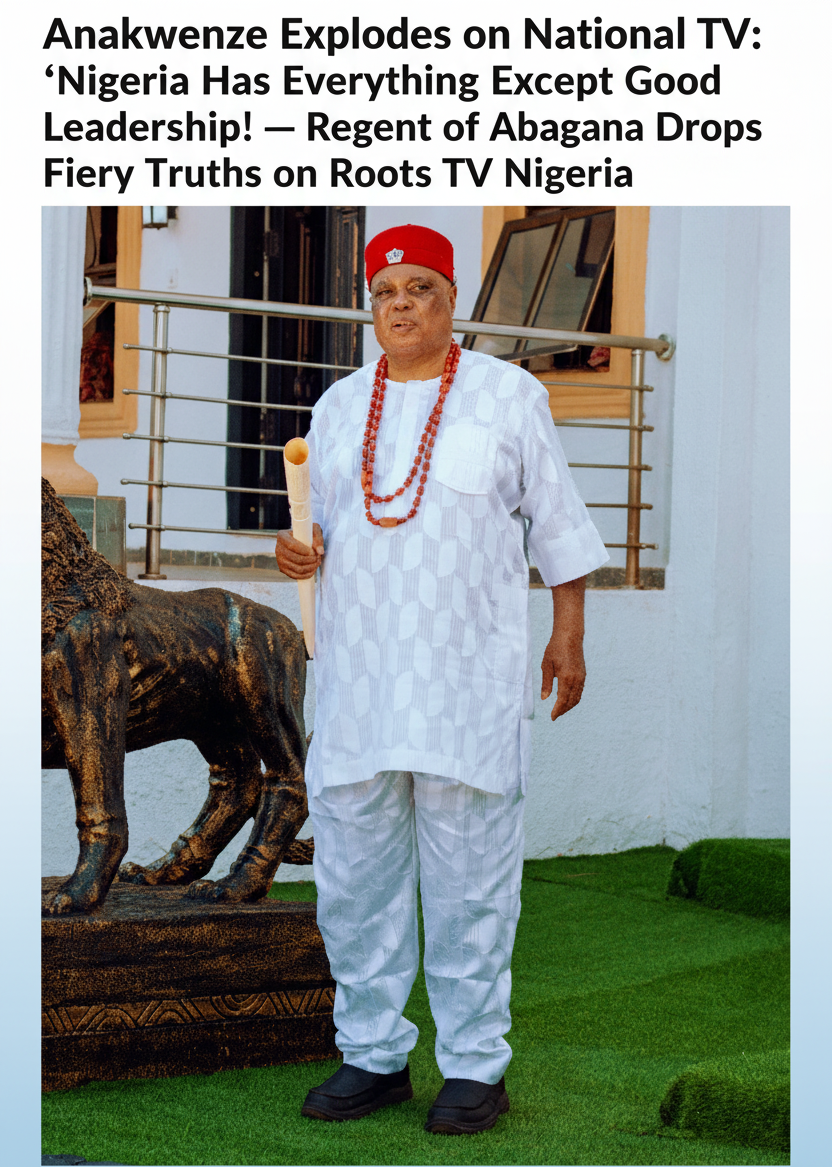
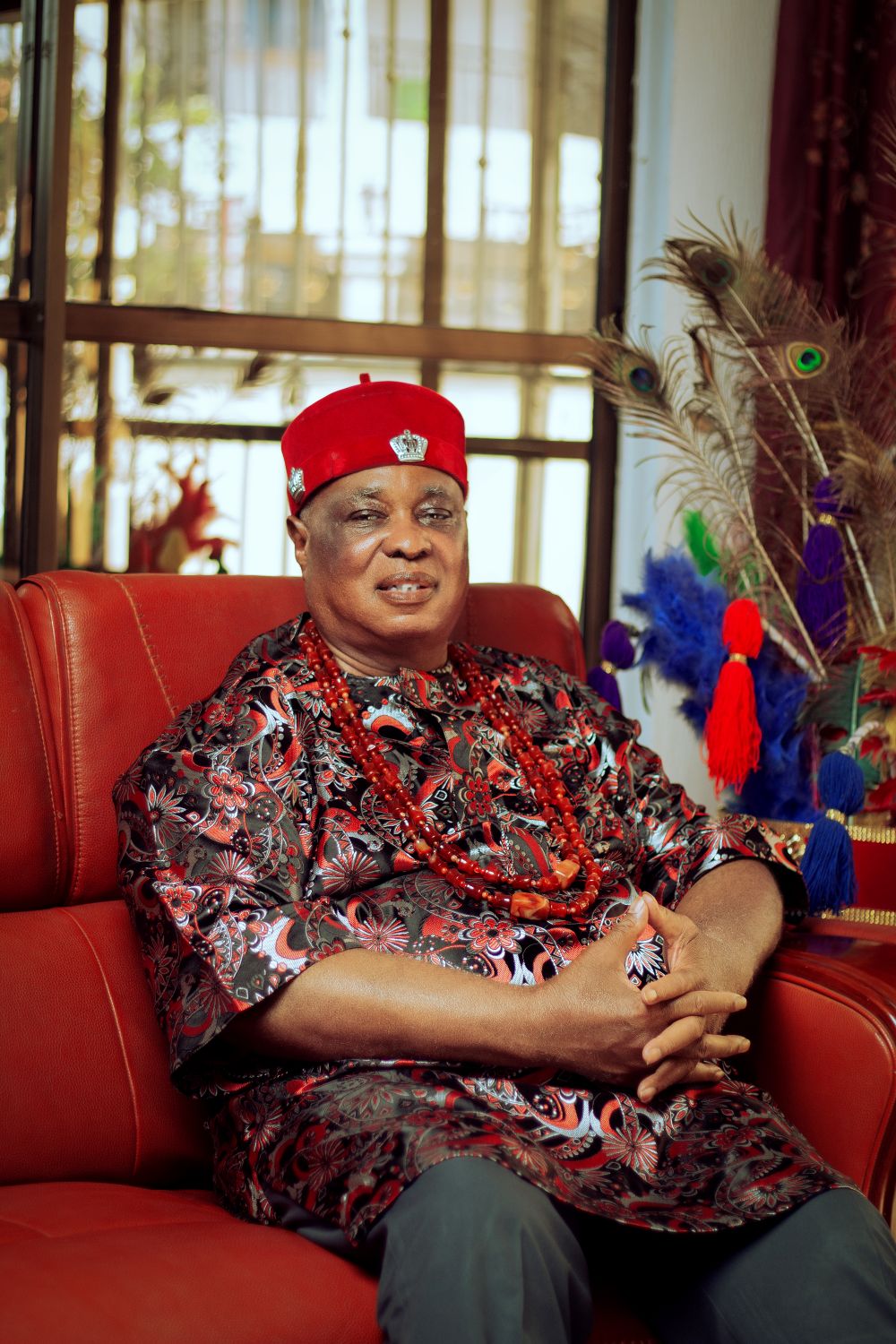
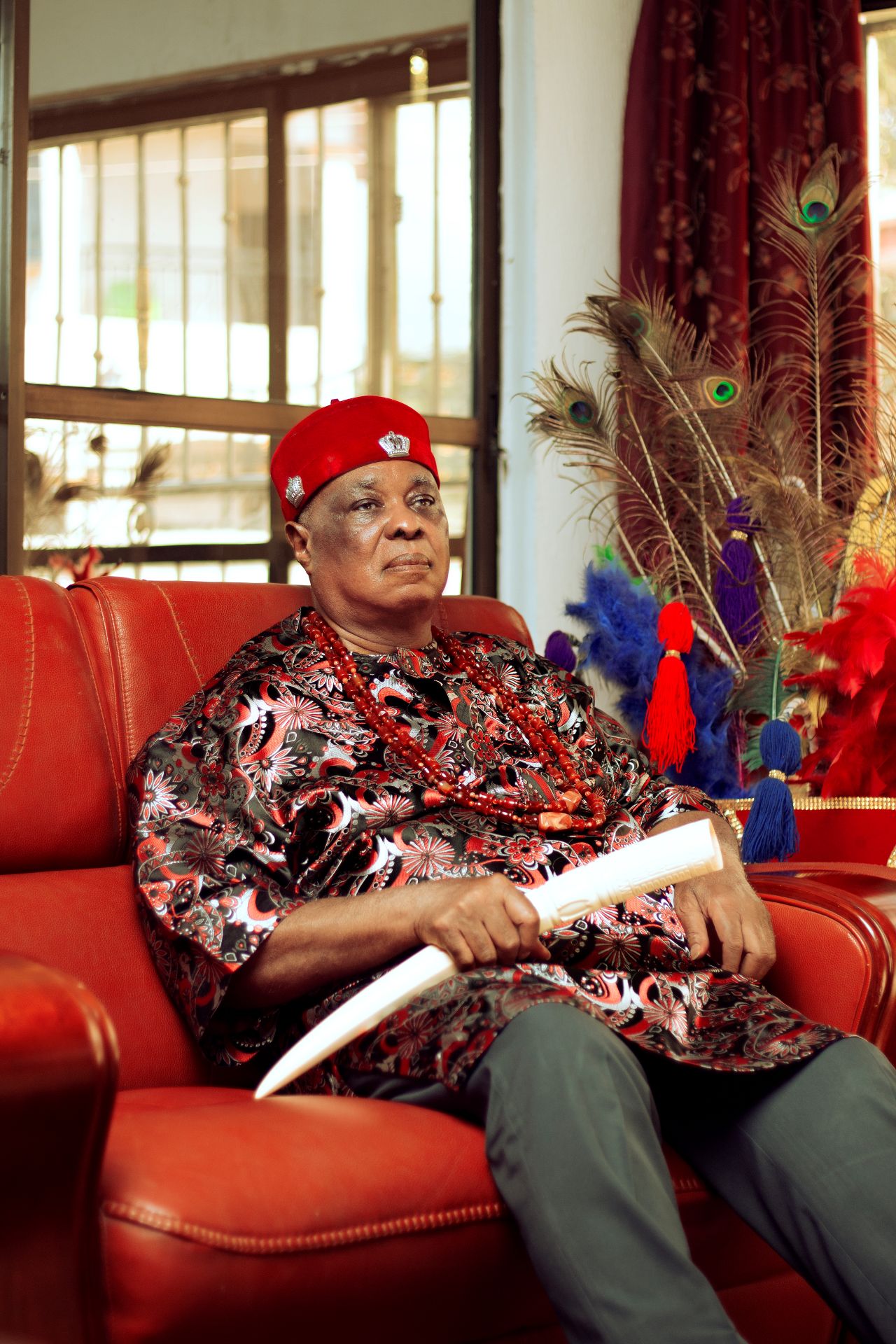
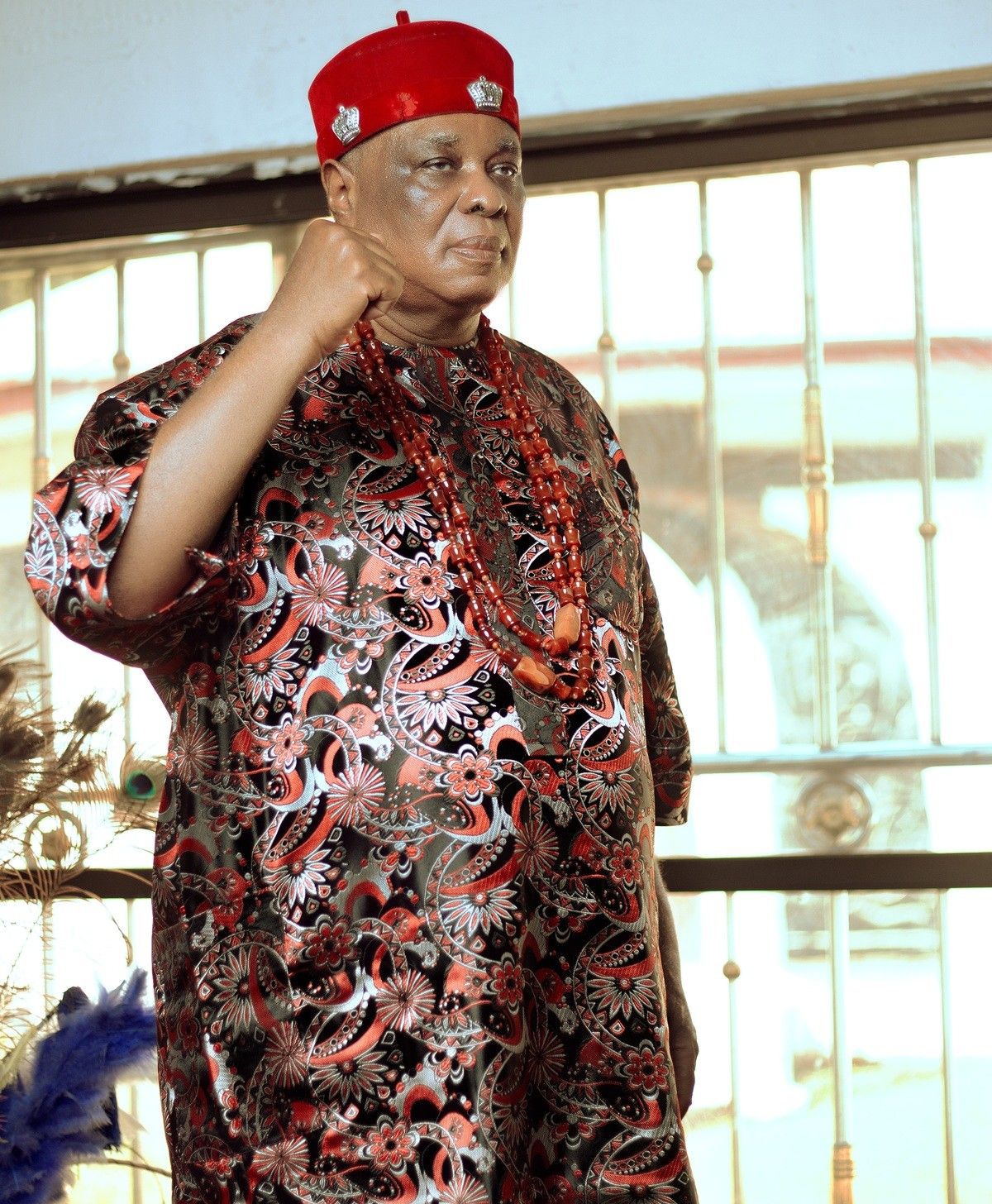
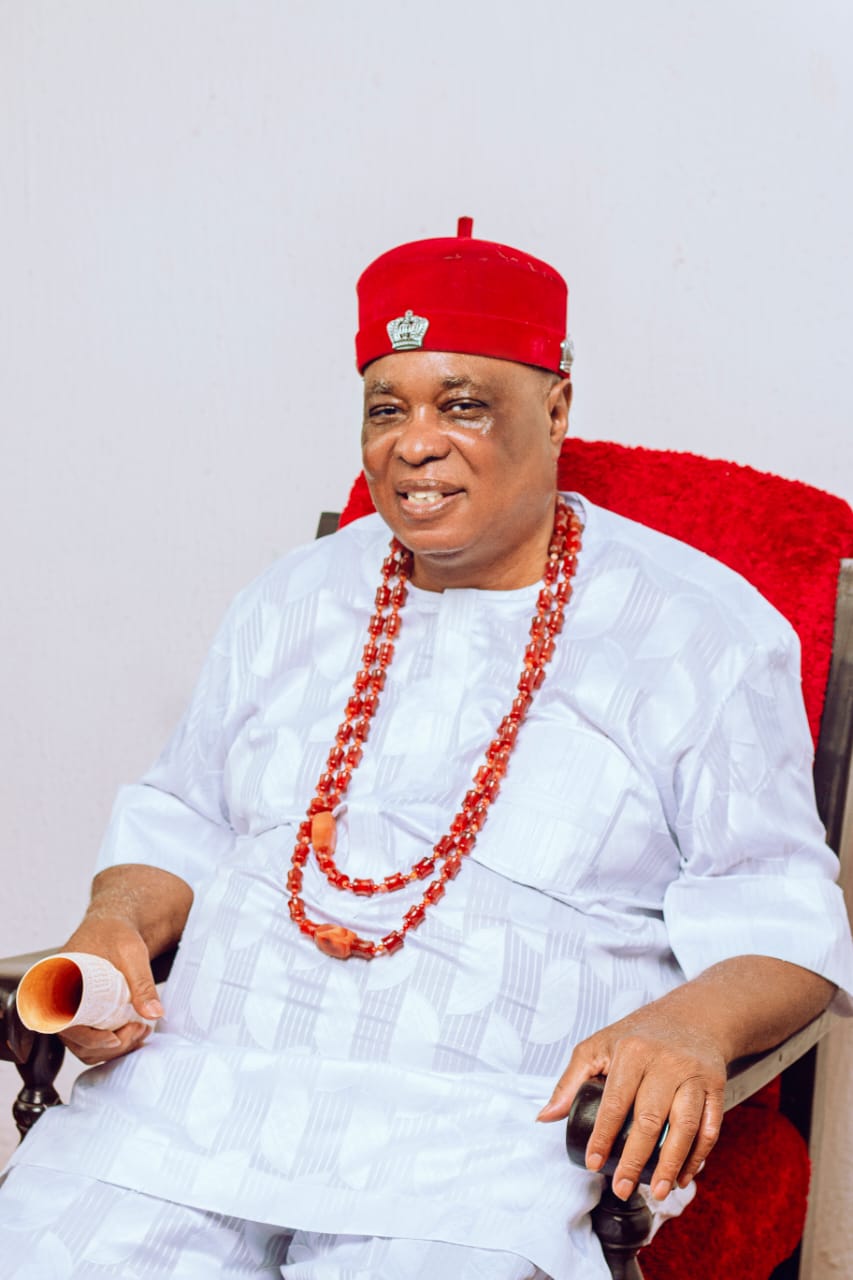
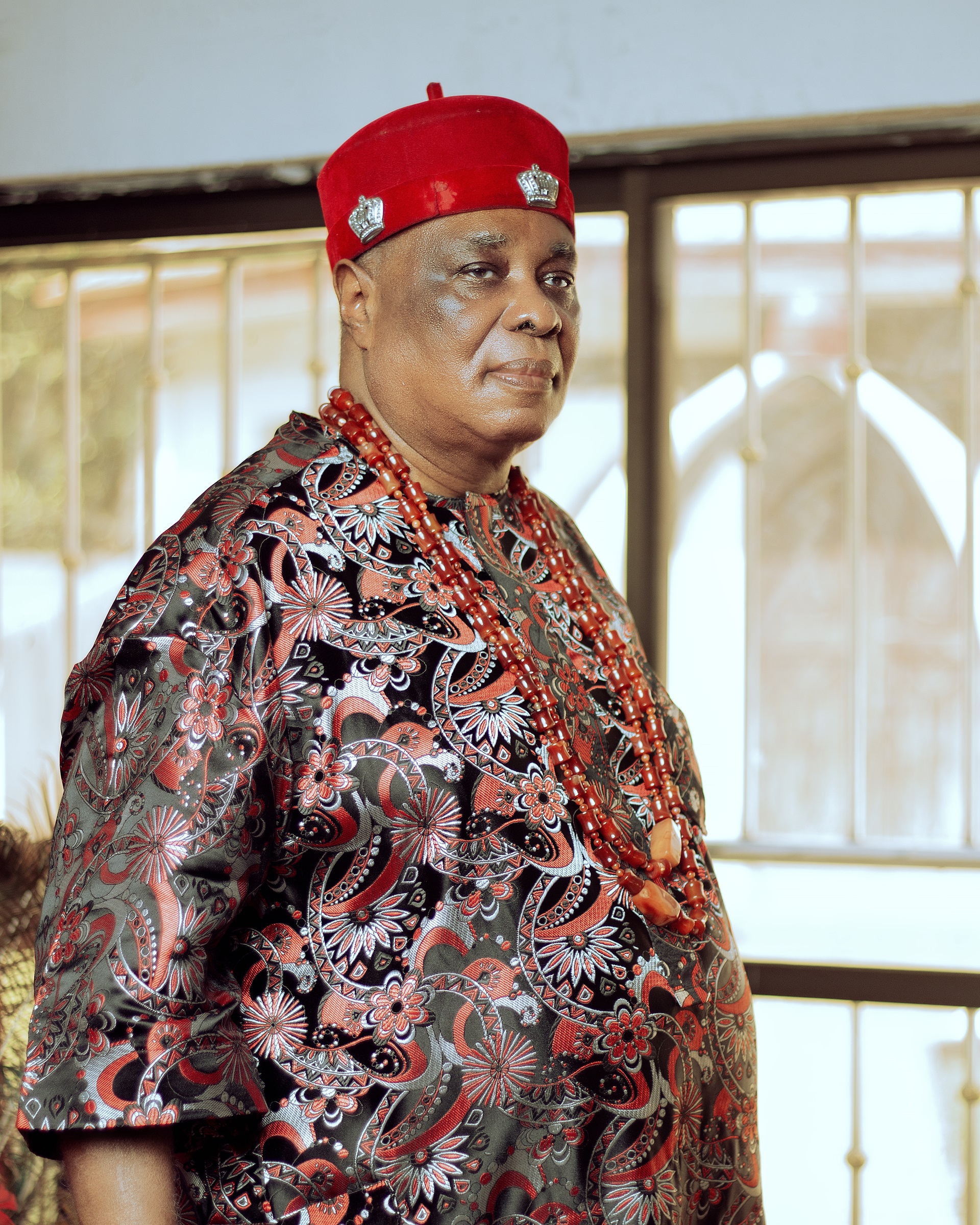
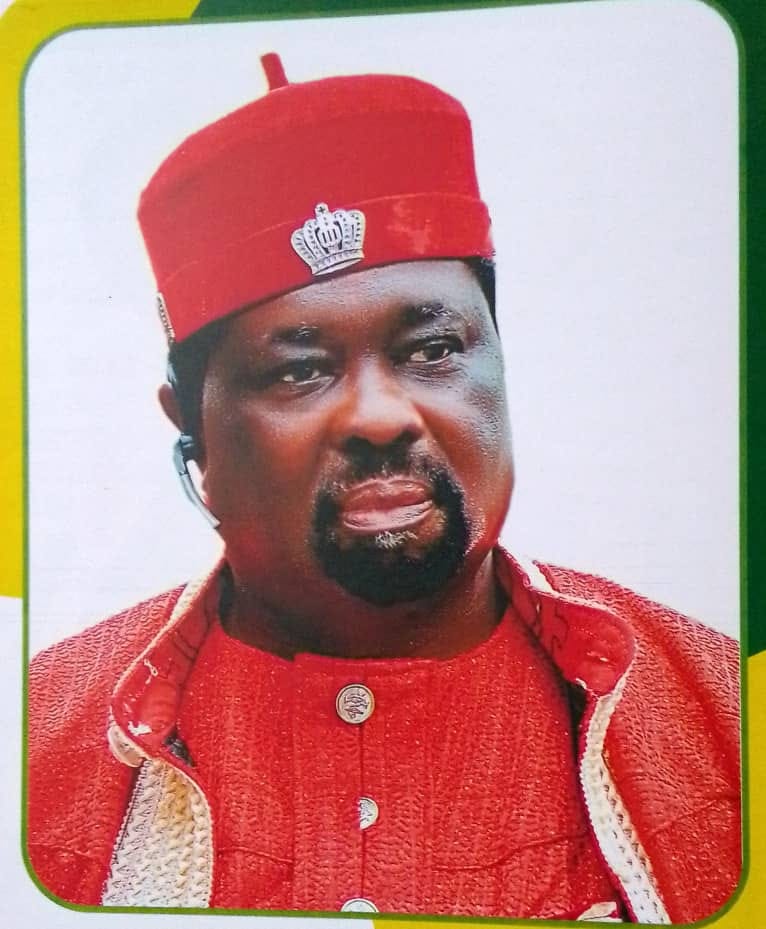
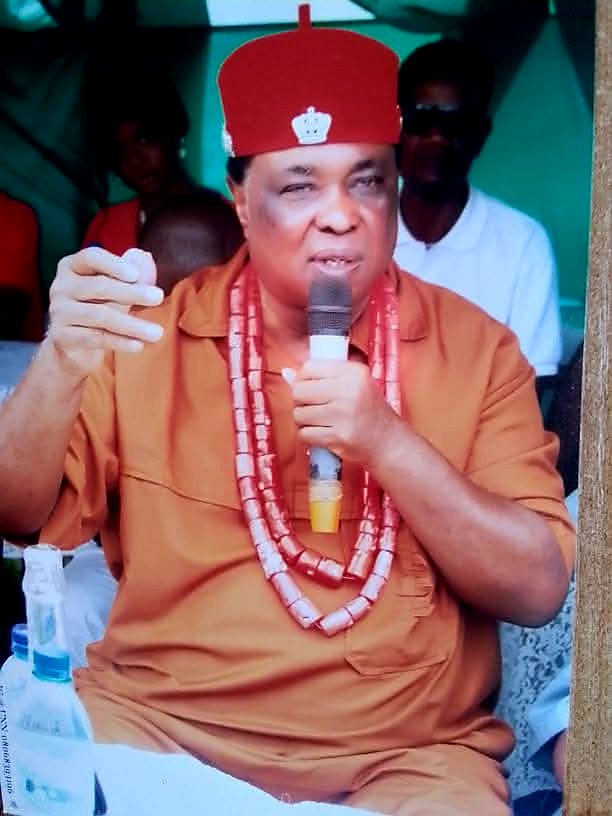
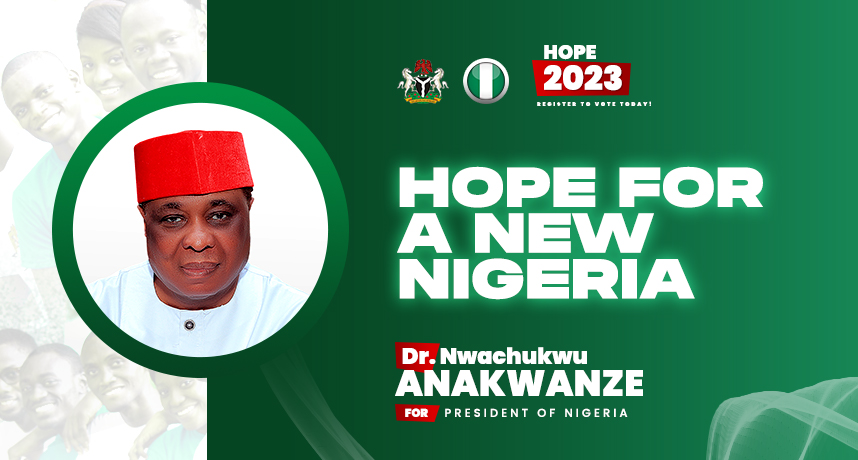
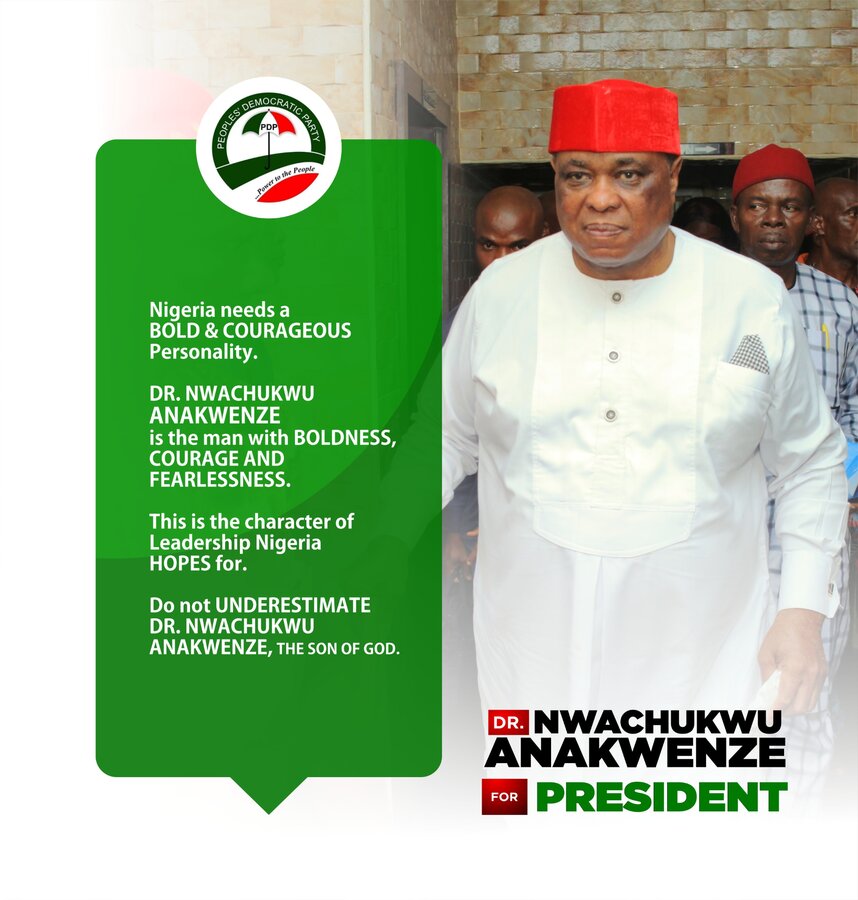
Former presidential aspirant and Regent of Abagana Kingdom, Nwachukwu Anakwenze, has called for a return to true federalism through regional restructuring, warning that Nigeria’s current governance system is undermining development and the future of its youth.
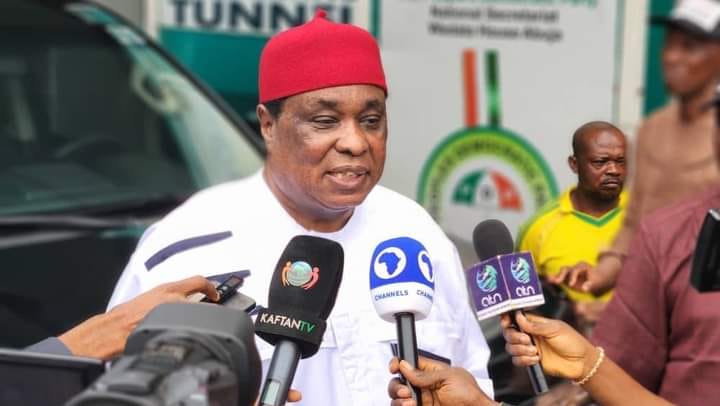
Speaking during a televised interview, Anakwenze who previously contested under the People's Democratic Party described the present structure as overly centralized and ineffective. He argued that Nigeria’s diversity should serve as a strength, fostering inclusivity and national progress built on merit, fairness, and accountability.
The former aspirant advocated a model of six autonomous regions, each empowered to control local resources while remitting agreed revenues to the federal government. Under his proposal, the central government would retain authority over defense, foreign policy, and other national priorities, while regions would drive economic growth, infrastructure, and industrial development.
""Anakwenze referenced Nigeria’s early post-independence era as a benchmark, noting that regions once thrived through competitive development. According to him, the Eastern Region led in industry and palm oil production, the Western Region excelled in cocoa production and education, and the Northern Region dominated agriculture, creating a system that encouraged accountability and innovation.
He criticized the current unitary framework, saying it promotes political patronage and ethnic favoritism. “What we have now is not working,” he said, emphasizing the need for structural reforms that would enable regions to compete and hold leaders accountable.
On economic policy, Anakwenze questioned the efficiency of state-owned enterprises, citing repeated failures in sectors such as refineries, steel, aviation, and shipping. He urged the government to reduce its role in commercial activities and instead create an enabling environment for private-sector growth.
Outlining his vision for national development, he pointed to opportunities in manufacturing, agriculture, tourism, and energy. He argued that Nigeria could become a major producer of industrial goods, achieve food security for Africa, and attract global tourism particularly from the African diaspora if structural reforms are implemented.
He also highlighted the country’s vast natural resources, lamenting that Nigeria continues to export raw materials while importing finished goods. This, he said, contributes to low productivity, weak economic output, and currency instability.
Expressing concern about the nation’s future, Anakwenze stressed the impact of governance failures on young people. He warned that without reform, Nigeria risks continued brain drain and economic stagnation. “I cry for the young people because the old people are destroying their future,” he stated.
The former aspirant cited past efforts at restructuring, including discussions linked to the Aburi Accord and national dialogue initiatives under former President Goodluck Jonathan. He also referenced federal systems in countries like India, United States, and China as examples of how diverse nations can maintain unity while decentralizing power.
Anakwenze concluded that meaningful restructuring must begin at the federal level through legislative action and broad consultations, before cascading to state and local governments. His remarks come amid growing national debate over governance reforms ahead of the 2027 general elections.










Comments
CsKfdjAxJrScwoLKDs
efQOAPYdQLcoilUFQdItX
YnHCSxXblqWnpcBmV
gcwVIqLildOVHyQr
TPcUgmSIfGvsINvsCHiKSTk
hIBrCJQGJOvTPtLtyOA